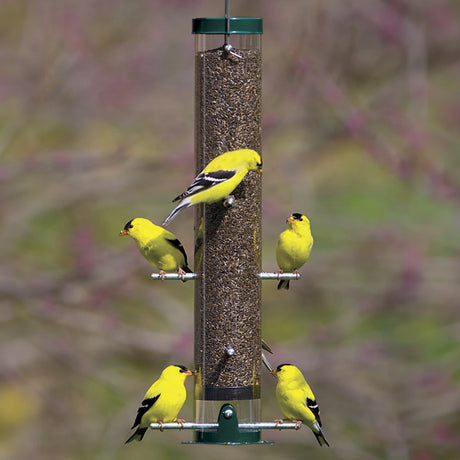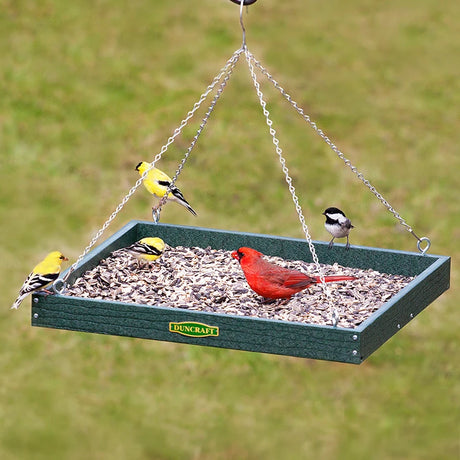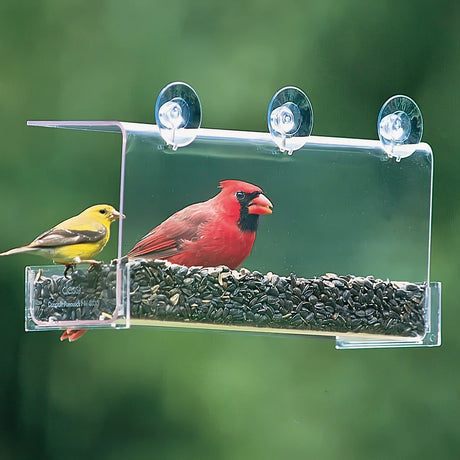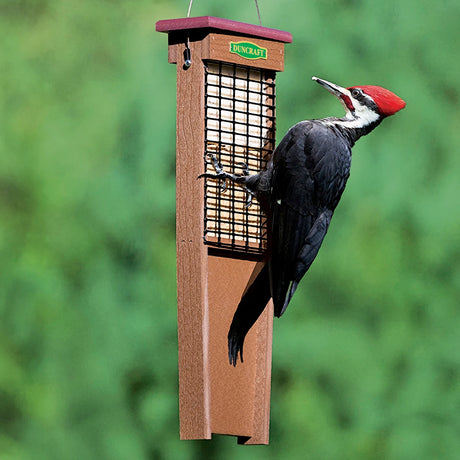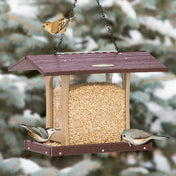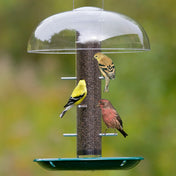

Feeding wild birds is one of the easiest and most relaxing ways to enjoy nature in your backyard. There is nothing like setting up a feeder, filling it with a fresh batch of seed, and watching the flock enjoy their feast. Part of making this a regular occurrence in your backyard is offering a clean and appealing feeder to your birds. Fortunately, we have a few tips to help keep the cleaning process simple and easy, so that you can spend less time scrubbing, and more time enjoying the view of your local feathered friends.

1. Choosing a Cleaning Solution
Effectively cleaning your feeder starts with choosing a good cleaning solution. For an easy at-home solution, you can simply mix 1 part vinegar with 4 parts water. Another option is to use a bleach and water solution, which can be prepared by mixing 1 part bleach with 10 parts water. If you do choose to use bleach, just be sure to rinse your feeder off really well after you are done with the cleaning. This will prevent any bleach residue from coming in contact with the fresh seed when you go to refill your feeder.
2. Soak Your Feeder
When you’ve got your cleaning solution ready to go, we recommend that you soak your feeder for 15-20 minutes. You might need to dump out any old seed from the bottom of your feeder first, but after that, simply place your feeder in a container full of your chosen cleaning solution. Even if there is some old seed still caked to the bottom of the tube, this soaking process will soften it up and make it easy to remove after. Soaking for the proper length of time will help to ensure that your feeder is disinfected prior to reinstallation in your yard.
3. Brush Your Feeder
Once you’ve let your feeder soak for the proper amount of time, use a long feeder brush to remove any remaining seed debris or buildup. One of the nice things about Duncraft feeders is that you can give them a thorough cleaning without taking everything apart. Simply brush, rinse thoroughly, and allow your feeder to air dry completely before refilling.
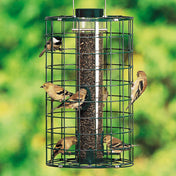
Duncraft Caged Feeders are designed to stay fully assembled, even during cleaning. There's no need to remove the protective cage—simply soak, brush, and rinse to keep your feeder clean and ready for your backyard birds. Likewise, there's no need to remove the green feeding ports embedded in the tube. We recommend leaving these in place, as repeated removal may distort the plastic over time.
If you are looking for a good brush for cleaning tube feeders, we do carry a couple different types that are built specifically for this purpose. Some affordable options are this feeder brush with bristles, and this foam tipped feeder brush. Both are long enough to reach the bottom of any Duncraft tube feeder, helping you spend less time cleaning and more time enjoying your backyard birds!

Do I Have To Clean My Bird Feeder?
We highly encourage our customers to regularly clean their bird feeders, whether it is a Duncraft feeder or any other. While it might not be everyone’s favorite part of the hobby, cleaning your feeder is critical to protecting the health of your local bird population. Sanitizing your feeder aids in the prevention of viral outbreaks, and it also ensures that bacteria and mold do not build up in the part of the feeder where the food is stored. In addition, a clean feeder will be much more successful at attracting birds to your yard. Just like how we would prefer to eat off of a clean plate, your birds will appreciate eating from a feeder that looks and feels well-maintained.
Feeder Hygiene Tips
In addition to the home-made solutions that we described above, there are many cleaning solutions that are specially formulated for cleaning bird feeders, bird houses, and bird baths. Feel free to browse our full collection of backyard birding cleaning products to see what options are available. Lastly, if you find yourself needing to clean your feeder constantly due to seed spoilage, consider trying out a product like Feeder Fresh. This non-toxic powder helps to absorb excess moisture in your feeder, preventing your seed from decaying or becoming moldy. Follow these tips to help extend the life of your feeder, get more out of your seed, and bring greater satisfaction to your birds!
Happy Birding!