Where should you place a bird feeder? It's one of the most common questions backyard birders ask — and one of the most overlooked. If your feeders aren't getting the attention you expected, or squirrels are getting there first, the problem is often placement, not the food.
Where you position your feeders affects everything: how safe birds feel, how easily they find food, and whether squirrels take over. With a few smart adjustments, you can attract more birds while keeping unwanted visitors in check.
Why Placement Matters
Birds look for feeding spots that offer:
- Quick escape routes to nearby cover
- Clear visibility so they can spot predators
- Easy, low-stress access to food
Poor placement can invite squirrels, create crowding among species, or even put birds at risk near windows. The goal is simple: make your feeders easy for birds — and difficult for squirrels.
The 5-7-9 Rule for Squirrel Control
Squirrels are remarkable jumpers, so distance is your best defense. The 5-7-9 Rule gives you a simple framework:
- 5 feet off the ground — high enough that squirrels can't jump up from below
- 7 feet away from structures — keep feeders at least 7 feet from trees, fences, decks, and walls
- 9 feet below anything overhead — prevent squirrels from dropping down from above
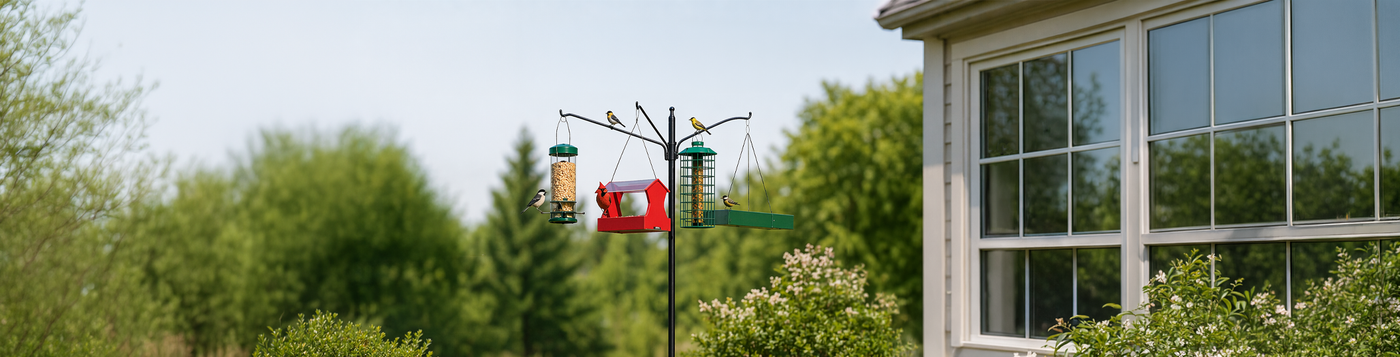
If a squirrel can jump to it, it will. Proper placement stops the problem before it starts. Feeder poles with adjustable arms make it much easier to hit all three measurements consistently.

Place Feeders Where Birds Feel Safe
Stay close to cover, but not too close. Position feeders about 5–10 feet from shrubs or trees. This gives birds a nearby escape route without making it easy for cats or hawks to hide right next to the feeder.
Keep feeders visible. Birds need to spot food quickly while flying overhead. Avoid tucking feeders deep inside dense bushes or cluttered corners. Aim for open sightlines with nearby protection — think of it as a clear landing zone with a quick exit nearby.
Reduce crowding. Too many birds competing at one feeder causes stress and can drive certain species away entirely. Space feeders apart, use multiple hanging points, and offer different food types in different areas to naturally spread activity across your yard.
Match Placement to Feeder Type
Different birds feed in different ways, and feeder placement should reflect that:
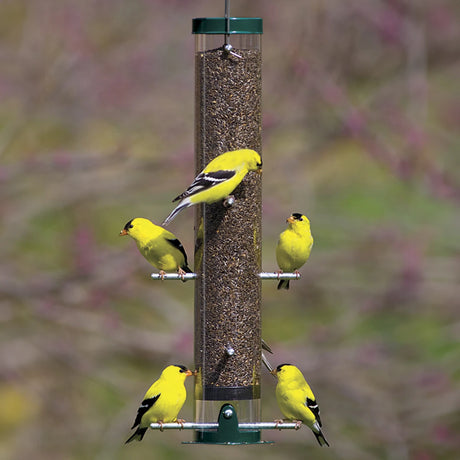
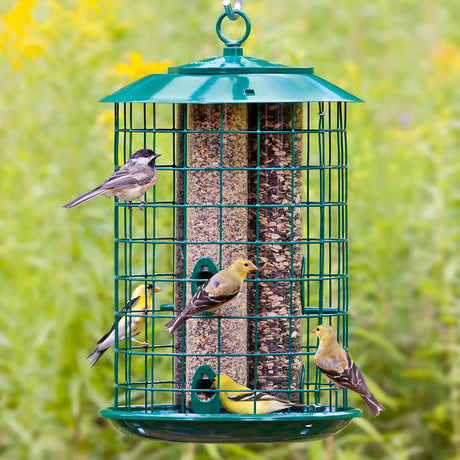
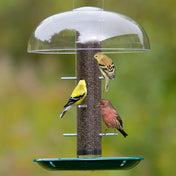
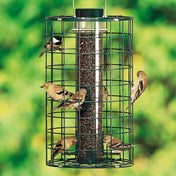
- Tube feeders: Hang in open areas at mid-height (4–6 feet) for finches, chickadees, and nuthatches
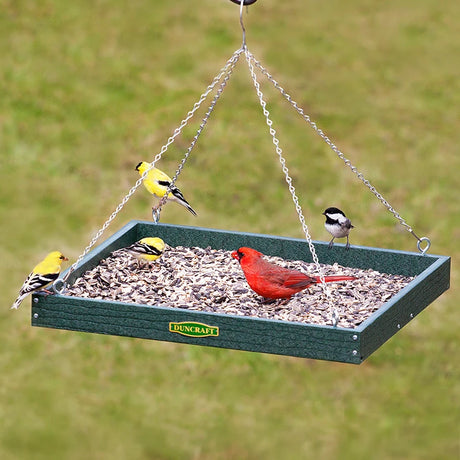
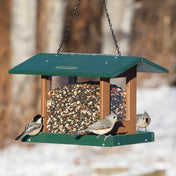
- Platform feeders: Place lower or near the ground for sparrows, juncos, and mourning doves
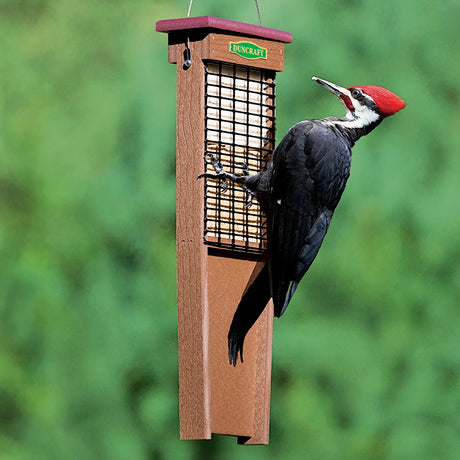
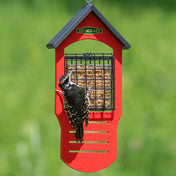
- Suet feeders: Position near tree trunks or vertical surfaces for woodpeckers and creepers
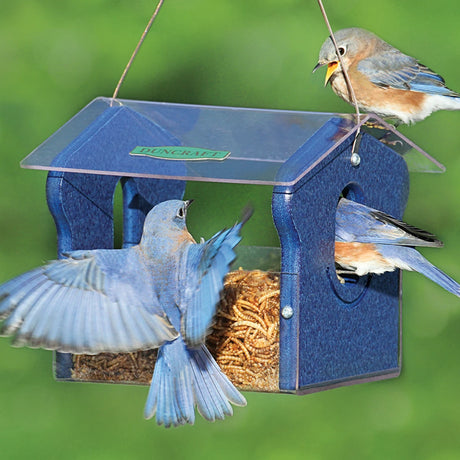
- Bluebird feeders: Place in open areas with clear sightlines, 4–6 feet high, away from dense shrubs
A varied setup at different heights and locations naturally attracts more species to your yard.

Safe Feeder Distances from Windows
Feeder placement doesn't just affect bird activity — it also affects bird safety. Window collisions are one of the leading causes of bird injury, but they're largely preventable with the right positioning.
There are two safe zones when it comes to windows:
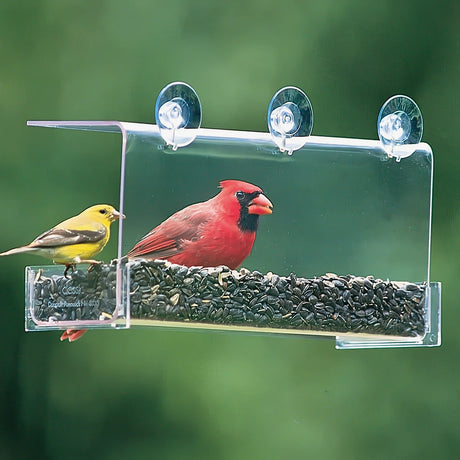
- Within 3 feet of a window: Birds can't build up enough speed to cause serious injury if they do hit the glass. This is a great spot for window-mounted feeders.
- More than 10 feet from a window: Gives birds enough distance to recognize and avoid the glass before reaching it.
Avoid the danger zone: 3–10 feet from a window. Feeders placed in this middle range give birds enough room to accelerate but not enough to course-correct. This is where most collisions happen. Even with good placement, reflections can still confuse birds. To make your yard safer:
- Add window decals or dot patterns to break up reflections
- Use exterior screens or window coverings on problem windows
- Avoid positioning feeders where birds fly directly between two clear sightlines (such as from one window toward another)

Use the Right Setup to Get Placement Right
Getting all of this right is much easier with a flexible setup. Feeder poles and adjustable hangers let you:
- Maintain proper squirrel-proof distances using the 5-7-9 rule
- Position feeders at the ideal height for your target species
- Space multiple feeders to reduce competition
- Adjust placement easily as seasons and bird activity change
A Better Setup Brings More Birds
When feeders are placed thoughtfully, everything improves: more bird visits, less competition, fewer squirrel problems, and safer feeding conditions for the birds you're trying to attract. A few small changes in placement can completely transform your backyard birding experience.
For more tips, check out our article on Using the 5-7-9 Rule for Keeping Squirrels Off Your Bird Feeders.
Have questions? Call us at 1-888-879-5095 (Mon–Fri, 9:00 AM–5:00 PM ET) or email info@duncraft.com. We're happy to help you find the right bird feeding setup for your backyard birds.
Happy Birding!
— The Duncraft Team, Birding Together Since 1952
Frequently Asked Questions
How far should a bird feeder be from a window?
Place feeders either within 3 feet or more than 10 feet from windows. The 3–10 foot danger zone gives birds enough speed to cause injury on impact.
How high should a bird feeder be off the ground?
At least 5 feet high to prevent squirrels from jumping up, per the 5-7-9 rule.
How far should a bird feeder be from a tree or fence?
At least 7 feet away from any structure to prevent squirrels from leaping across.
What is the 5-7-9 rule for bird feeders?
The 5-7-9 rule means placing feeders 5 feet off the ground, 7 feet from structures, and 9 feet below any overhead objects to prevent squirrel access.