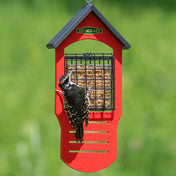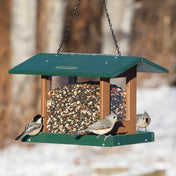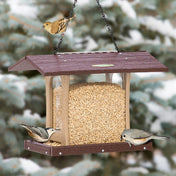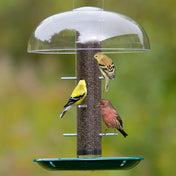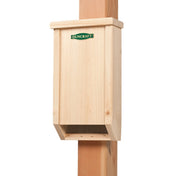

Many backyard birds — including bluebirds, chickadees, wrens, and woodpeckers — naturally nest in tree cavities. Since most yards don't have standing dead trees, well-designed bird houses give these cavity-nesting birds a safe, reliable place to raise their young. Choosing the right bird house means understanding a few key features that make nesting successful.
At Duncraft, we've been helping backyard birders attract and support nesting birds since 1952. Here's what to look for when choosing a bird house that birds will actually use.
What Birds Look for in a Bird House
Entry hole size matters
The size of the entrance hole determines which birds can use the house — and which ones can't. For example, Eastern Bluebirds prefer a 1½" round hole, while Western and Mountain Bluebirds need a slightly larger 1 9⁄16" opening. Oval or slot-style openings can help discourage invasive species like House Sparrows.
Ventilation and drainage are essential
A good bird house should stay dry inside while allowing heat and moisture to escape. Look for ventilation holes near the top and drainage holes in the floor.
Easy access for cleaning
Bird houses should be cleaned out after each nesting season. A design with a hinged top, side, or front panel makes this quick and easy — especially if you plan to monitor nests.
Safe, durable materials
Pine and cedar are classic choices, while modern recycled plastic lumber offers excellent durability and sanitation. Avoid pressure-treated wood, which can be toxic to birds.
Protection from parasites
Some bird houses include mesh floor inserts that help keep nestlings safe from blowfly larvae and other parasites.
Predator protection
A built-in predator guard is one of the most important features to look for. Proper guards help prevent raccoons, snakes, cats, and other climbers from reaching inside the nest box.
Bird House Size & Placement Guide
Different birds have different nesting needs. Use the charts below as a general guide when choosing and placing a bird house in your yard.


Choosing Made Easy
If all of this sounds like a lot to think about, don't worry — well-designed bird houses already include the features birds need most. You don't have to figure it out from scratch.
The Duncraft Bird-Safe® Bluebird House & Pole with Noel Guard checks every box: proper entry size, ventilation, drainage, easy cleaning, and predator protection — available in natural pine or durable recycled plastic. Duncraft's Eco-Friendly Bluebird House is another excellent option, designed with both birds and sustainability in mind.
We offer dozens of bird houses in a wide range of styles, sizes, and materials — so you can find one that works for both you and your backyard birds. Have questions? Our team is happy to help.
Call us at 1-888-879-5095 or email info@duncraft.com. We're available Monday–Friday, 8:30am–5:00pm Eastern Time.
Frequently Asked Questions
What size hole does a bird house need?
Entry hole size depends on the species you want to attract. Eastern Bluebirds need a 1½" round hole, while chickadees and wrens prefer a smaller 1⅛" opening. Using the correct hole size helps attract the right birds and discourages invasive species like House Sparrows from taking over the nest box.
Where should I mount a bird house?
Mounting height and location vary by species. Bluebird houses work best on open fence posts or poles 4–6 feet high, facing away from prevailing winds. Wren houses can be hung from tree branches or eaves at 5–10 feet. Always face the entrance away from direct afternoon sun and toward open habitat where birds can easily approach.
How do I clean a bird house?
Clean bird houses at the end of each nesting season — typically in late summer or fall. Remove old nesting material, scrub the interior with a stiff brush, and let it dry completely before closing it back up. A hinged panel or removable roof makes this much easier. Clean houses are healthier for birds and more likely to be reused the following season.
What materials are best for bird houses?
Untreated pine and cedar are traditional favorites — they're durable, breathable, and safe for birds. Recycled plastic lumber is an increasingly popular option that resists rot, requires no painting, and is easy to sanitize. Avoid pressure-treated wood, which contains chemicals that can be harmful to nesting birds and their young.
Which birds use bird houses in backyards?
Common cavity-nesting birds that readily use bird houses include Eastern Bluebirds, Tree Swallows, House Wrens, Black-capped Chickadees, Carolina Wrens, Downy Woodpeckers, and Purple Martins. The species you attract will depend on your region, habitat, and the size and placement of the house.
Why buy a bird house from Duncraft?
Duncraft has been helping backyard birders since 1952. Every bird house we carry is selected with birds' safety and nesting success in mind — featuring proper entry sizes, ventilation, drainage, and predator protection. Whether you're attracting bluebirds, wrens, or chickadees, our team can help you find the right house for your yard and the birds you want to support.