
By Duncraft Birding Experts | June 2026 | 6 min read
You set up your feeders carefully. You chose good seed. You positioned everything just right. And for a while, it worked beautifully — chickadees, finches, a cardinal or two. Then the starlings arrived, and now the feeder feels like a different place entirely.
If you've noticed fewer of your favorite birds since starlings moved in, you're not imagining it. Starlings do displace other birds — both at feeders and at nest sites — and understanding exactly how and why it happens is the first step toward doing something about it.
At Duncraft, we've been helping backyard birders protect the birds they love since 1952. Here's an honest look at how starlings affect other species, and what actually works to restore balance to your yard.
1. The Short Answer: Yes, Starlings Do Displace Other Birds
European Starlings affect other backyard birds in two distinct ways: competition at feeders and competition for nest sites. Both are real, both are significant, and they require slightly different responses.
2. At the Feeder: Displacement Through Dominance
Starlings don't need to physically attack other birds to displace them. Their sheer numbers and boldness are usually enough.
When a flock of starlings arrives at a feeding station, smaller birds — chickadees, finches, nuthatches, titmice — typically leave. This isn't cowardice; it's a reasonable calculation. A small bird that tries to hold its ground at a feeder occupied by a dozen starlings risks injury and expends far more energy than the food is worth. So they wait. And if the starlings stay long enough, some of those smaller birds may stop visiting that feeder altogether, shifting to other food sources in the area.
This is especially pronounced with suet feeders. Starlings have a strong preference for suet, and a standard suet cage gives them easy, upright access. Once they've established a suet station as theirs, smaller woodpeckers, chickadees, and nuthatches may be effectively locked out.
Species most commonly displaced at feeders by starlings:
- Downy Woodpeckers and Hairy Woodpeckers
- Black-capped and Carolina Chickadees
- White-breasted Nuthatches
- Tufted Titmice
- House Finches and American Goldfinches
Cardinals and Blue Jays, being larger and more assertive, hold their ground against starlings more effectively — though even they will sometimes cede a feeder when the flock pressure is intense enough.
3. At the Nest Box: Displacement with Higher Stakes
The competition for nest sites is where starling displacement has the most serious long-term consequences for native birds.
European Starlings are cavity nesters — they raise their young inside enclosed spaces rather than in open cup nests. The problem is that they don't excavate their own cavities. Instead, they take over holes and nest boxes that other species have made or claimed, often evicting birds that are already incubating eggs or raising chicks.
Starlings are fast, aggressive, and persistent nest-site competitors. They can:
- Force established bluebirds, Tree Swallows, or chickadees out of a nest box
- Destroy eggs and nestlings of competing species
- Claim multiple cavities in a territory to prevent other birds from nesting nearby
Species most commonly displaced from nest sites by starlings:
- Eastern Bluebirds
- Tree Swallows
- Purple Martins
- Great Crested Flycatchers
- Red-bellied Woodpeckers (original excavators of cavities starlings later claim)
- Chickadees and Wrens (where entry holes are large enough)
For bluebird conservation specifically, the impact of starling nest-site competition was severe enough that it contributed to significant population declines in the mid-20th century. The recovery of Eastern Bluebird populations is largely credited to widespread nest box programs — but only when those boxes are monitored and protected from starling takeover.
4. How Long Does the Displacement Last?
At feeders, displacement lasts as long as the flock stays. When the starlings move on — which they do, especially in warmer months when natural food sources are abundant — your regular songbirds typically return within hours or days.
In winter, when large flocks form and natural food is scarce, feeder displacement can be persistent and months-long. This is when the right feeder design matters most.
At nest boxes, displacement can result in an entire nesting season lost for the displaced species. A pair of bluebirds that loses a nest box in April may not find another suitable site in time to raise a successful brood that year.
5. What Actually Works
At the Feeder
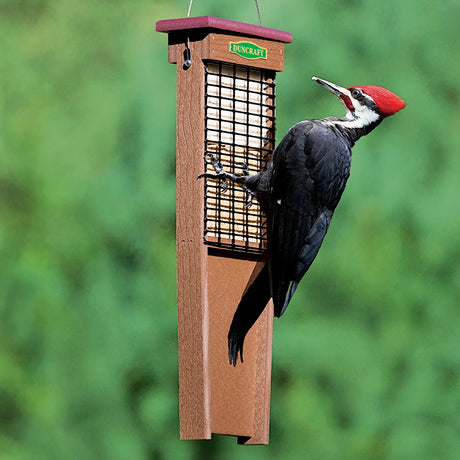
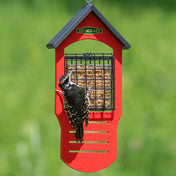
Switch to upside-down suet feeders. This is the single most impactful change you can make for starlings at suet stations. Woodpeckers, chickadees, and nuthatches manage clinging from below naturally. Starlings almost never adapt to it. Products like the Duncraft Eco-Strong Upside Down Suet Feeder solve the suet problem without affecting your target birds at all.

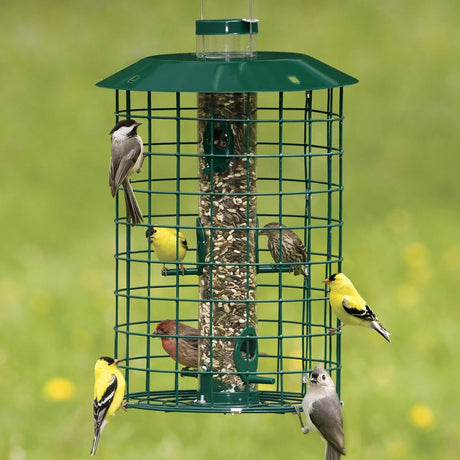
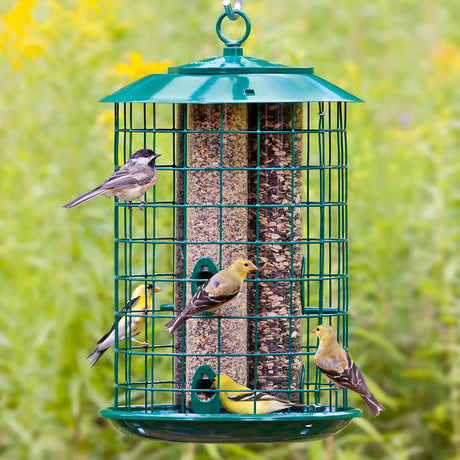
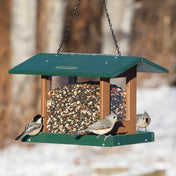
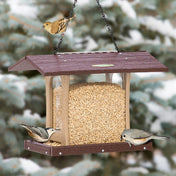
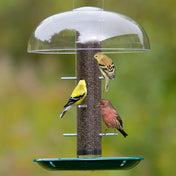
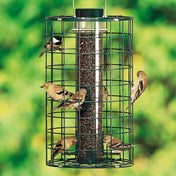
Use caged feeders for seed. A caged feeder with openings sized for small birds physically prevents starling access — no calibration, no guesswork. The Duncraft Bird Sanctuary is built exactly for this purpose.

Switch to safflower seed. Starlings strongly dislike safflower. Most of your target songbirds — cardinals, chickadees, titmice, nuthatches — accept it readily. Making safflower your primary seed removes a major incentive for starlings to visit in the first place.
Take a short feeding break if overrun. If a large flock has established your yard as a reliable food source, removing feeders for 1–2 weeks can break that pattern. Your regular songbirds, which forage more independently, will return quickly once you reintroduce deterrent-focused feeders.
At the Nest Box
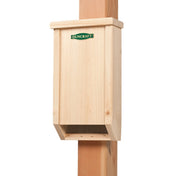
Size entry holes to your target species. A 1½-inch entry hole is standard for Eastern Bluebirds and keeps out most starlings. A 1⅛-inch hole is correct for chickadees and wrens and is too small for starlings entirely.
Add an entrance extender. A "Noel guard" or starling-resistant entrance tube makes the approach tunnel too long and narrow for a starling's body, even if the hole itself is nominally large enough.
Monitor weekly during nesting season. Check boxes every 5–7 days from February through July. If starlings have begun building, remove the nesting material — this is legal for this non-native invasive species and doesn't harm a protected native bird.
Install predator baffles. While primarily designed to deter raccoons and snakes, baffles also make it harder for starlings to approach boxes on poles from below.
6. A Note on Patience
Even with the best setup, you may still see individual starlings attempt to access your feeders — especially young birds in summer that haven't yet learned which stations are difficult. This is normal. What you're working toward is a yard where the balance has shifted: where your target birds feel safe and well-fed, and where starlings find enough friction that they eventually spend their time elsewhere.
Pro tip: Most birders who commit to deterrent-focused feeder design see meaningful results within a few weeks.
7. Quick Checklist: Protecting Your Backyard Birds from Starlings
☐ Replace standard suet feeders with upside-down designs
☐ Add caged feeders for seed stations
☐ Switch primary seed offering to safflower
☐ Check nest box entry hole sizes — resize if needed
☐ Monitor nest boxes weekly from February through July
☐ Consider adding entrance extenders to bluebird boxes
☐ Take a 1–2 week feeding break if a flock has fully taken over
Shop Starling-Resistant Feeders
The right feeder design makes all the difference. Shop our most effective solutions for protecting your favorite backyard birds from starlings.
Shop Caged Feeders Shop Suet Feeders Shop Safflower Seed Shop Nest Boxes
Frequently Asked Questions
Do starlings attack other birds?
Starlings don't typically attack other birds in the way a hawk or predator would. Their displacement is mostly behavioral — arriving in large numbers, dominating a feeder through sheer presence, and chasing away smaller birds that try to access the same food. At nest sites, however, starlings can be genuinely aggressive, destroying eggs and evicting nesting pairs from cavities.
Will my birds come back after starlings scare them away?
Yes, in almost all cases. When starlings move on from a feeder, your regular songbirds typically return within hours or a day or two. If you've made feeder improvements while the starlings were present — switching to caged feeders or upside-down suet — your target birds often discover the improved setup quickly and begin using it regularly.
Are any birds not scared of starlings?
Larger and more assertive species hold their ground more effectively against starlings. Northern Cardinals, Blue Jays, Red-bellied Woodpeckers, and Mourning Doves are generally less easily displaced. Smaller birds like finches, chickadees, and nuthatches are most affected.
How do I keep starlings from taking over my bluebird house?
Choose a nest box with a 1½-inch entry hole — the standard bluebird size — and add a starling-resistant entrance extender (Noel guard) that makes the tunnel too long for a starling to pass through comfortably. Monitor the box every 5–7 days from late February onward. Starling nests can be legally removed from boxes because the European Starling is a non-native invasive species not protected under the Migratory Bird Treaty Act.
Do starlings scare away hummingbirds?
Starlings and hummingbirds generally don't compete directly, as they use different feeder types and food sources. Hummingbird feeders — with their small ports designed for needle-thin bills — are not accessible to starlings. If you're seeing fewer hummingbirds, starlings are unlikely to be the cause.