By Duncraft Birding Experts | August 2026 | 8 min read
There's a moment every backyard birder knows. You look out the window and see a bird you've never noticed before — maybe a flash of red, or a striking flash of yellow and black — and you think: how do I get more of those?
The answer almost always comes back to food.
Birds are remarkably consistent in what they eat. A Northern Cardinal that loves safflower in January loves safflower in July. A goldfinch that lives for Nyjer® seed will visit your feeder every single day as long as you have it. Match the food to the bird, and you've essentially sent out a standing invitation.
At Duncraft, we've been helping backyard birders stock the right foods since 1952. This guide is organized the way most birders actually think — by the bird you want to attract, not by a list of seed types. Find your bird, learn what it loves, and set your feeder up accordingly.
Start Here: Who's Already Visiting?
Before you run out and buy six different seed varieties, spend a few minutes watching your yard. The birds already visiting are your best clue to what's working — and what to add next.
If you're not sure who's coming by, a free app like Merlin Bird ID from the Cornell Lab of Ornithology can identify birds from a photo in seconds. Once you know who's there, this guide tells you exactly what they want.

1. Northern Cardinal
The most-requested backyard bird in America — and one of the easiest to feed well.
Cardinals are ground-level and low-platform feeders by nature. They like to have space to sit comfortably while they eat, and they have strong bills designed to crack open larger seeds.
What They Love
- Safflower seed — Cardinals actively prefer safflower, and it has the added advantage of deterring squirrels, grackles, and starlings. If you only make one food change for Cardinals, this is it.
- Black oil sunflower — Their second-favorite. The thin shell makes it easy to crack open.
- Sunflower hearts and chips — Hulled sunflower is particularly convenient for Cardinals because there's no work involved. More eating, less effort.
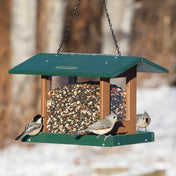
Best feeder setup: A hopper feeder or platform tray with generous perching space. Cardinals are not comfortable on short perches or tube feeders with small ports. The Duncraft Grandview Hopper Feeder is a great option for red feathered friends.
Pro tip: Put out safflower in a hopper feeder near a shrub or low tree branch where Cardinals feel safe landing before approaching.

2. American Goldfinch
Small, bright, and completely devoted to one food.
Few birds demonstrate food loyalty as dramatically as the American Goldfinch. Give them a reliable Nyjer® station and they will visit every day, year-round, in numbers.
What They Love
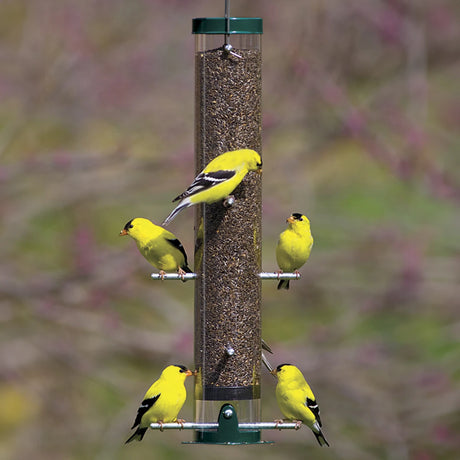
- Nyjer® seed (also called thistle) — This is the goldfinch food. Small, oily, and energy-dense, Nyjer® is specifically suited to the goldfinch's tiny bill and high metabolism. It won't germinate and create weeds under your feeder.
- Sunflower chips and hearts — A good secondary offering at any finch station.
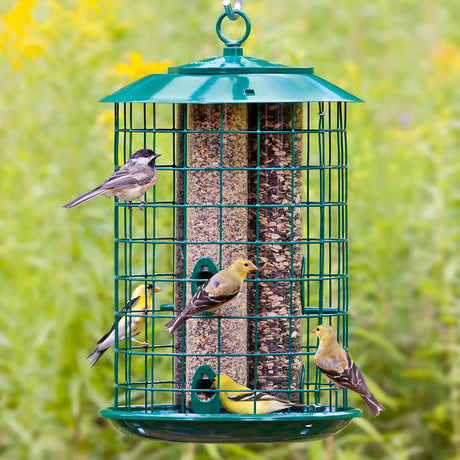
Best feeder setup: A dedicated Nyjer® sock or tube feeder with small ports. Goldfinches are comfortable clinging and feeding upside-down, which naturally excludes most larger nuisance birds.
Pro tip: Don't be alarmed if your goldfinch feeder goes quiet in midsummer — numbers often dip in June and July before surging again in August.

3. Black-capped and Carolina Chickadee
The bird that makes every other bird feel welcome.
Chickadees are often the first birds to discover a new feeder — and once they do, other species follow their lead. They're curious, bold, and completely unintimidated by humans.
What They Love
- Black oil sunflower — The chickadee's go-to seed. They grab one, fly to a nearby branch, hold it with their feet, and hammer it open.
- Sunflower hearts and chips — Even easier to eat, and chickadees take these readily.
- Suet — Especially in winter, chickadees are enthusiastic suet consumers.
- Peanuts (shelled) — Chickadees love peanut pieces and will carry them off to cache for later.
- Mealworms — During nesting season, parent chickadees need protein. Mealworms are a powerhouse they'll return to again and again.
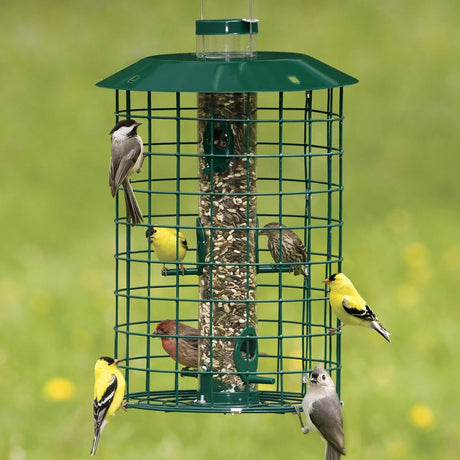
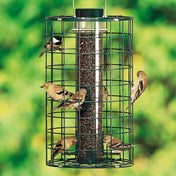
Best feeder setup: Tube feeders with short or medium perches, caged feeders, or any small-bird-friendly design. Chickadees are acrobatic and comfortable clinging from almost any position. Check out the Duncraft Original Tube Feeder with Baffle & Seed Tray.

4. Tufted Titmouse
Chickadee's equally charming cousin — with even stronger opinions about peanuts.
Tufted Titmice are regulars at most eastern feeders and have an outsized personality for a bird their size. They're bold enough to push chickadees off a perch but chatty enough to announce danger for every bird in the yard.
What They Love
- Sunflower seed and hearts — Their primary seed food, eaten in the same grab-and-go style as chickadees.
- Peanuts (shelled) — Titmice are particularly drawn to peanuts and will select the largest piece they can carry.
- Suet — A reliable cold-weather draw.
- Mealworms — Like chickadees, titmice seek protein during nesting season.
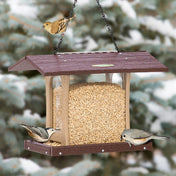
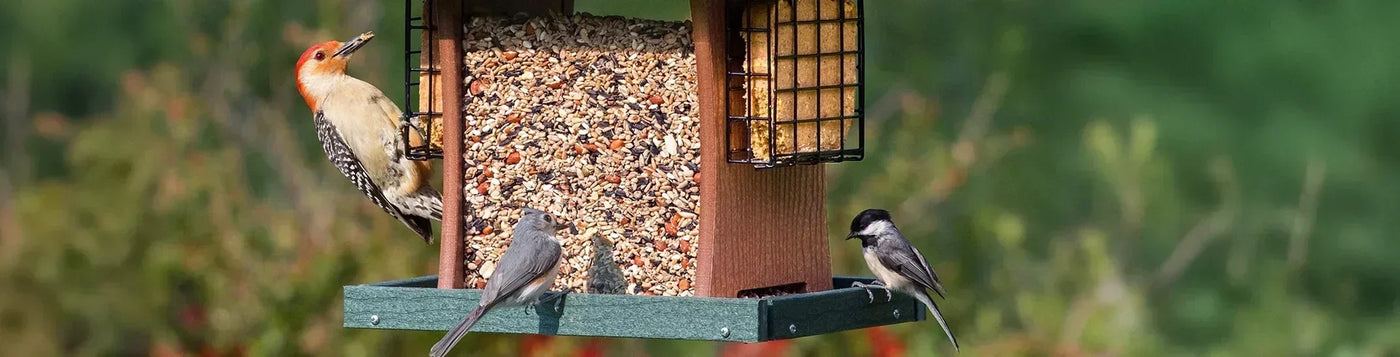
Best feeder setup: Tube feeders, hoppers, or any feeder with a comfortable perching spot — same as chickadees. The Duncraft 4-Sided Classic Hopper Bird Feeder is an excellent option for Tufted Titmice.

5. White-breasted Nuthatch
The bird that walks down trees headfirst and doesn't care what you think about it.
Nuthatches are one of the most distinctive backyard birds — their habit of creeping down tree trunks headfirst is immediately recognizable. They're also enthusiastic hoarders, caching seeds in bark crevices to eat later.
What They Love
- Sunflower seed and hearts — Their most-consumed feeder food.
- Peanuts and peanut butter products — Nuthatches are passionate peanut fans. A peanut feeder placed on or near a tree trunk mimics their natural foraging position.
- Suet — Nuthatches are reliable suet consumers, comfortable clinging from both standard and upside-down suet feeders.
Best feeder setup: Tube feeders, peanut feeders, and suet feeders all work well. Nuthatches are one of the few birds that regularly uses upside-down suet feeders. To fufill their peanut craving, check out the Duncraft Peanut Butter Feeder.

6. Downy and Hairy Woodpecker
The year-round regulars who love suet more than almost anything.
Woodpeckers are cavity excavators, insect hunters, and suet enthusiasts. If you don't have woodpeckers regularly visiting your yard, adding suet will almost certainly change that.
What They Love
- Suet — This is woodpecker food above all else. Standard suet cakes, peanut suet, and insect-blend suet are all excellent. In summer, switch to no-melt suet formulas.
- Peanuts (shelled and whole) — Both Downy and Hairy Woodpeckers eat peanuts enthusiastically. Whole peanuts in a mesh feeder give them the pecking activity they naturally crave.
- Sunflower seed — Woodpeckers will visit tube and hopper feeders for sunflower, though suet is always their first priority.
- Mealworms — Particularly useful during nesting season.
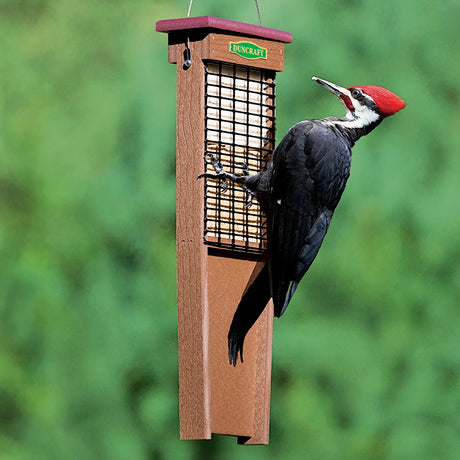
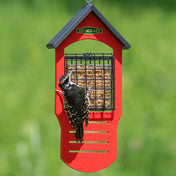
Best feeder setup: Suet cage mounted on or near a tree at 6–10 feet. For starling resistance, use an upside-down suet feeder — woodpeckers have no trouble with it, starlings almost never adapt. Take a peek at the Duncraft Eco-Strong Upside Down Double Suet Feeder.

7. Eastern Bluebird
The bird most backyard birders dream about — and the one most often lost to wrong food choices.
Bluebirds are insectivores at heart. They don't eat seed. If you're putting out sunflower hoping to attract bluebirds, it won't work — but the right offering will have them visiting reliably within days.
What They Love
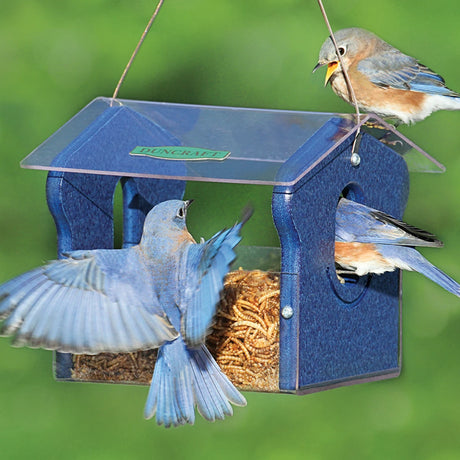
- Mealworms — This is the bluebird food. Live mealworms are most effective, particularly during nesting season. Dried mealworms are more convenient and still work well once bluebirds have established your yard as a reliable food source.
- Fruit — Bluebirds occasionally eat small fruits and berries, especially in winter. Raisins softened in warm water are a good winter offering.
- Suet with insect blend — Insect-based suet can attract bluebirds, though mealworms remain the primary draw.
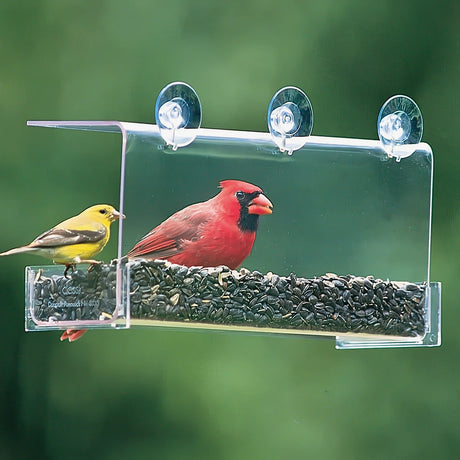
Best feeder setup: A dedicated mealworm dish or tray feeder with low sides, placed in an open area where bluebirds can see it from a distance. The Duncraft Bluebird Cafe Feeder has a clear view of the mealworms, and includes pexiglass sides to keep big birds out.
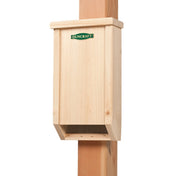
Don't forget the nest box: Providing a properly sized nest box (1½-inch entry hole) is the single most powerful thing you can do to invite bluebirds to stay in your yard, not just visit. The Duncraft Well Vented Bluebird Nestbox Bird House helps protect bluebirds from rain and from overheating in the warm weather.

8. Ruby-throated Hummingbird
The smallest visitor — and the one that generates the most excitement.
Hummingbirds are pure nectar specialists. They burn through energy at an extraordinary rate and depend on high-sugar food sources to fuel a metabolism that runs at up to 1,200 heartbeats per minute.
What They Love
- Fresh nectar — Make your own with a simple 4:1 ratio of water to plain white granulated sugar. Boil the water, dissolve the sugar, cool completely before filling. Change it every 3–5 days in warm weather. Never use red dye, honey, artificial sweeteners, or brown sugar.
Best feeder setup: A clean hummingbird feeder with red accents placed in a partially shaded spot. Clean it thoroughly every time you refill — mold in a hummingbird feeder is a serious health risk. JB's Hummingbird Feeder is durable, easy to clean, and includes 4 feeding stations.
Timing: In most of the eastern US, Ruby-throated Hummingbirds arrive in late April or early May and depart by October. Have feeders up before they arrive.

9. Blue Jay
Bold, smart, loud — and secretly one of the most fascinating birds you can feed.
Blue Jays are the extroverts of the backyard. They announce everything, eat dramatically, and have a memory for food caches that rivals some mammals.
What They Love
- Whole peanuts in the shell — This is Blue Jay food. They will take a peanut, test its weight, reject the light ones, select the heaviest, and fly off to cache it.
- Shelled peanuts — Faster and easier; Blue Jays are equally enthusiastic.
- Sunflower seed — A reliable secondary food at hopper and platform feeders.
- Cracked corn — Blue Jays enjoy corn, though be aware it also attracts grackles and starlings.
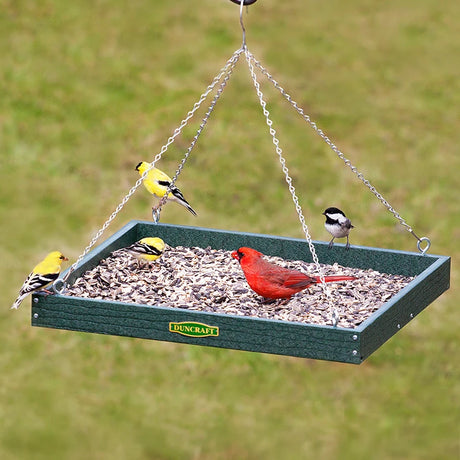
Best feeder setup: A platform feeder or hopper with generous space — Blue Jays are large birds and need room. The Duncraft Open Air Ground Platform Bird Feeder has plenty of space for Blue Jays to feast.

10. Mourning Dove
The gentle constants — always there, always peaceful, always hungry.
Mourning Doves are ground feeders by nature. They prefer to forage at ground level or on low platform feeders with plenty of open space around them.
What They Love
- Millet (white proso millet) — The dove's seed of choice. Scattered on the ground or offered on a low platform tray, white millet reliably draws doves.
- Sunflower seed — Mourning Doves eat sunflower, especially hearts and chips, from platform feeders.
- Safflower — Doves accept safflower readily, which makes it a good choice for ground trays if you want to deter grackles.
- Cracked corn — A dove favorite, though be aware of what else it attracts.
Best feeder setup: A ground tray or low platform feeder in an open area. The closer to the ground, the more comfortable doves are. The Duncraft Eco-Strong Ground Platform Bird Feeder is low to the ground, but has some height to prevent water from pooling and ruining your seed.

11. Dark-eyed Junco
The “snowbird” — winter's most reliable visitor.
Juncos are ground-feeding sparrows that arrive from northern breeding grounds as temperatures drop. In many regions, they're the most common winter feeder visitor — and one of the easiest to attract.
What They Love
- White proso millet — The number one junco food. Scattered directly on the ground or offered on a very low platform.
- Sunflower hearts and chips — Juncos accept hulled sunflower readily and appreciate not having to crack a shell in cold weather.
- Peanut pieces — A good protein source that juncos take from the ground.
Best feeder setup: Ground or near-ground level. Juncos prefer open areas with nearby cover — a brush pile or low shrubs gives them the escape route they want before approaching food. Check out the Duncraft Open Air Ground Platform Bird Feeder.

12. Rose-breasted Grosbeak
A spring migration showstopper — here briefly, completely worth every seed.
Rose-breasted Grosbeaks pass through most of the eastern United States during spring migration (late April through May) and again briefly in fall.
What They Love
- Safflower seed — Grosbeaks are enthusiastic safflower consumers and will visit safflower feeders reliably during migration.
- Black oil sunflower — Their other primary seed food. A combination of both is ideal during migration windows.
- Sunflower hearts — Easy eating for a bird on a high-energy migration push.
Best feeder setup: Hopper or platform feeders with generous perching space. Have safflower and sunflower stocked and ready from late April onward. The Duncraft Grandview Hopper with Suet Cages feeder features plenty of perching space.

13. Baltimore Oriole
One of the most spectacular feeder visitors — and one of the most specific about food.
Baltimore Orioles are birds of color and sweetness. They're drawn to orange, attracted to fruit, and will visit nectar feeders if they're the right design.
What They Love
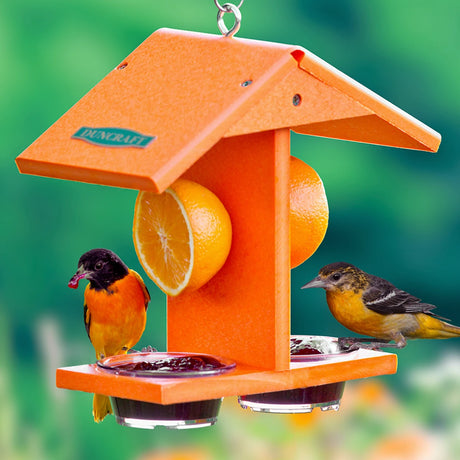
- Orange halves — Simply cut a fresh orange in half and impale it on an oriole feeder spike or nail on a fence post. The color and scent draw orioles from remarkable distances.
- Grape jelly — Oriole gold, particularly in spring. Pure grape jelly (not sugar-free) in a small dish draws orioles powerfully. Limit quantities in warm weather as jelly can ferment.
- Oriole nectar — A slightly sweeter nectar than hummingbird formula (1 part sugar to 6 parts water) offered in a dedicated oriole feeder with large ports.
- Mealworms — Orioles occasionally take mealworms, particularly when feeding young.
Timing: Baltimore Orioles arrive in the eastern US in late April or early May. Have feeders up and oranges out before they arrive — orioles establish feeding territory early and a late setup can mean a missed season. The Duncraft Eco-Oriole Fruit & Jelly Feeder has space for oranges and jelly to help attract Orioles to your backyard.
14. The “Avoid” List: Foods That Work Against You
A few common foods do more harm than good — either by attracting nuisance species, spoiling quickly, or providing poor nutrition:
- Cheap mixed seed blends with milo, millet, and cracked corn as primary ingredients attract grackles, starlings, cowbirds, and house sparrows while many desirable species ignore them.
- Bread, crackers, and processed human food — nutritionally empty and potentially harmful to birds.
- Red-dyed hummingbird nectar — the dye is unnecessary and potentially harmful. Stick to plain white sugar and water.
- Spoiled or wet seed — clumped, moldy, or wet seed is a health hazard. Check feeders after rain and replace seed that has clumped or smells musty.
15. Building Your Setup: A Practical Starting Point
You don't need to stock every food on day one. Here's a sensible starting sequence:
☐ Week 1 — The Foundation: Black oil sunflower seed in a tube or hopper feeder. This single food attracts more species than anything else and gives you an immediate picture of who's visiting.
☐ Week 2 — Add Nyjer®: A dedicated Nyjer® sock or tube feeder draws goldfinches and other finches without competing with your sunflower station.
☐ Week 3 — Add Suet: A suet cage — ideally upside-down — brings in woodpeckers, nuthatches, and chickadees for a whole new dimension of activity.
☐ Week 4 and beyond: Tailor based on who you're seeing. Want more Cardinals? Switch to safflower. Seeing Bluebirds nearby? Add a mealworm dish. Orioles passing through? Get the oranges and jelly out.
The goal isn't a perfect setup on day one — it's a feeding station that grows with what you learn from watching your yard.
One More Thing: Consistency Wins
The most important factor in attracting a variety of birds isn't the food — it's the reliability of the food. Birds learn your yard's schedule quickly. Once they know that Duncraft feeder is always stocked, they build it into their daily route. Miss a week and it can take several days to rebuild the traffic. Stay consistent and your yard becomes a destination.
For more guidance on managing specific visitors, handling nuisance birds, and seasonal feeding strategies, visit our Birding Tips blog. Questions? Call us at 1-888-879-5095 (Mon–Fri, 9:00 AM–5:00 PM ET) or email info@duncraft.com.
Shop Bird Food by Species
Find exactly what your favorite backyard birds are looking for — from safflower and Nyjer® to suet, mealworms, and oriole feeders.
Frequently Asked Questions
What is the single best bird food to start with?
Black oil sunflower seed. It attracts more species than any other single food — Cardinals, chickadees, titmice, nuthatches, finches, grosbeaks, woodpeckers, and more all eat it readily. If you're starting from scratch, begin here and build from there.
Why aren't birds coming to my new feeder?
Give it time — usually 1–2 weeks for birds to discover a new feeder, especially in a yard without an established feeding history. Placing the feeder near natural cover (shrubs, trees), keeping seed fresh, and adding a birdbath nearby all speed up discovery. Chickadees are usually first; other species follow once they see activity.
Can I offer multiple foods at once?
Absolutely — and experienced birders almost always do. Offering sunflower, Nyjer®, suet, and safflower at separate stations dramatically increases both the variety and volume of birds visiting your yard. The key is keeping each food fresh and each feeder clean.
How often should I change the seed in my feeders?
Every 1–2 weeks in normal conditions, more frequently in wet or hot weather. Seed that has clumped, smells musty, or looks discolored should be discarded and replaced. Clean feeders thoroughly once a month with a diluted bleach solution (9 parts water to 1 part bleach), then rinse and dry completely before refilling.
What food is best in winter?
High-fat, high-calorie foods are most valuable in cold weather. Suet, black oil sunflower, peanuts, and sunflower hearts are all excellent cold-weather offerings. Safflower also works well year-round. Avoid foods that freeze easily or absorb moisture — stick to dry seed and no-melt suet formulas in winter.